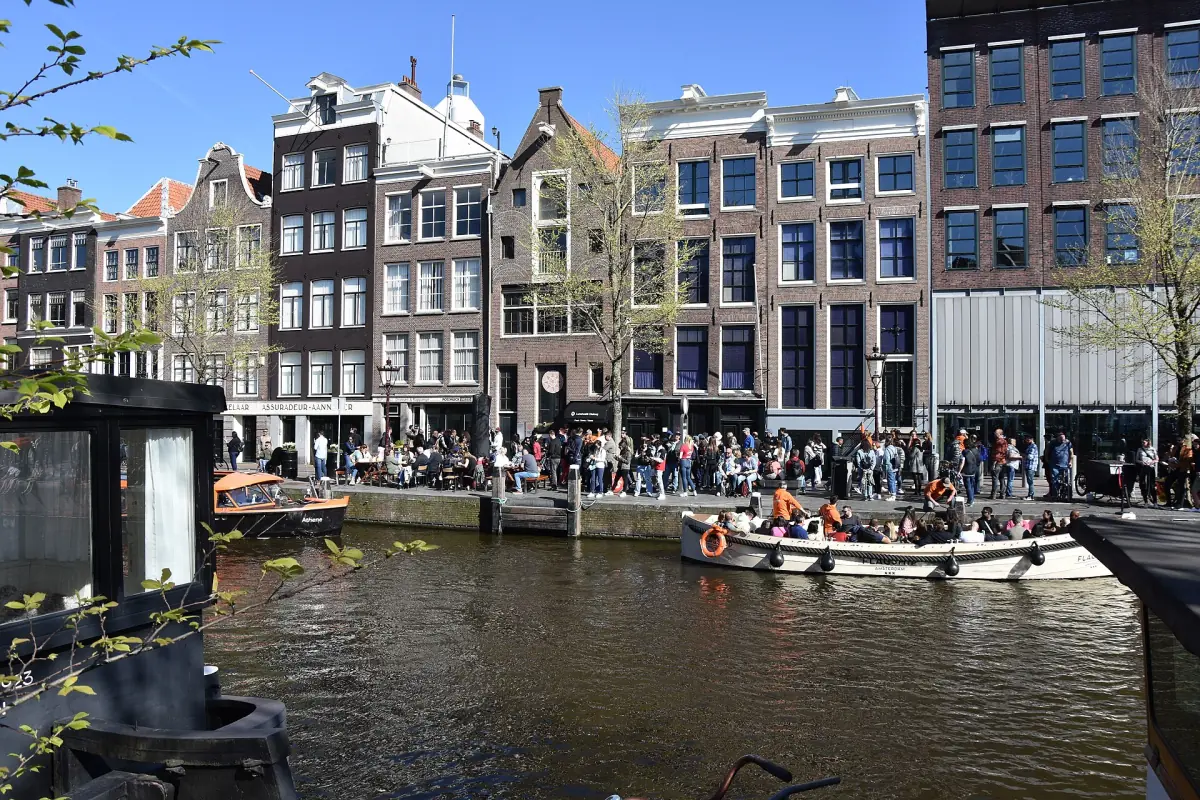
The hiding place at Prinsengracht 263
The Secret Annex is the rear part of the historic business building at Prinsengracht 263 in Amsterdam. The building housed the firm of Otto Frank. He had prepared the hiding place there before his family went underground on 6 July 1942. That was the day after his daughter Margot received a call-up to a so-called labour camp.
The people in hiding lived in the upper floors of the rear house. In Dutch it is called the Achterhuis. They stayed until 4 August 1944, the day of their arrest.
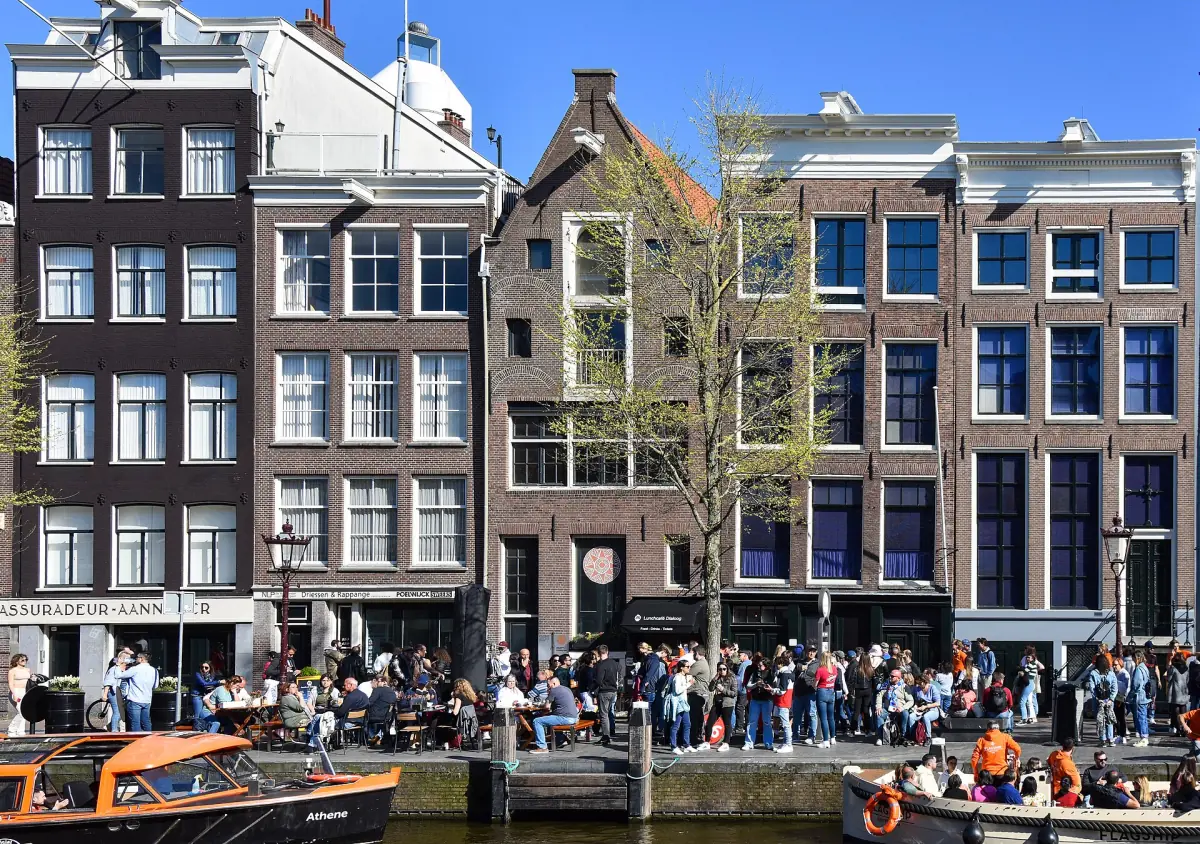
The eight people in hiding
Two families and one more man, who joined them later.
The Frank family
Otto Frank and his wife Edith, and their daughters Margot and Anne. Otto Frank prepared the hiding place in his company building.
The van Pels family
Hermann and Auguste van Pels and their son Peter joined the Franks in the Annex.
Fritz Pfeffer
Fritz Pfeffer came into hiding later. He shared a room with Anne.
The only survivor
Of the eight, only Otto Frank survived. He was liberated in Auschwitz by Soviet troops. Later he supported the publication of the diary and the museum. Anne's story is told on the page about the Anne Frank story.
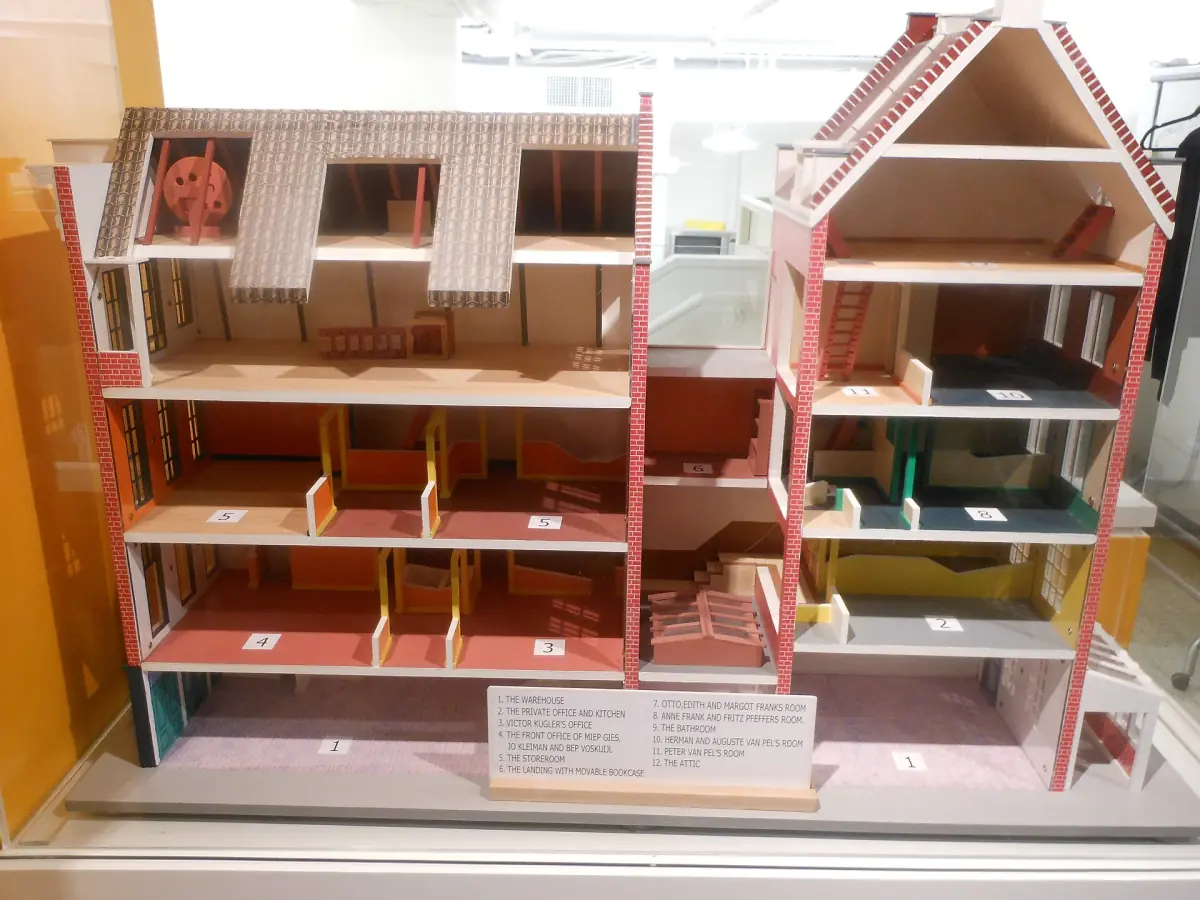
The rooms of the Annex
How the space was shared between 1942 and 1944.
Anne and Fritz Pfeffer
Anne shared a room with Fritz Pfeffer.
Otto, Edith and Margot
Otto Frank, his wife Edith and their daughter Margot used one room together.
The van Pels room
The room of Hermann and Auguste van Pels was also the place where everyone cooked and ate together.
Peter's room
Peter's room led to the attic.
Bathroom
The residents shared one bathroom with a washbasin and a toilet.
The attic
The attic stored food and was used to dry laundry. Anne withdrew there, or talked with Peter.
This room plan describes how the Annex was used during the hiding. It is not a route description for a visit. Do not assume that you can enter every room, including the attic.
The helpers
The people in hiding depended on a small group of people who knew about the Annex. These were Johannes Kleiman, Victor Kugler, Bep Voskuijl, Johan Voskuijl, and Miep and Jan Gies. All six are named here.
On 4 August 1944, the people in hiding were arrested. Johannes Kleiman and Victor Kugler, two of the helpers, were arrested as well. Why the raid took place is not established, and no person has been proven to have betrayed the hiding place.
Johan Voskuijl built the revolving bookcase in August 1942. It served as the concealed access to the Annex.
The bookcase today
The original bookcase has survived. Today it is partly protected by glass. It is not a replica, and it is not an exhibit that visitors operate themselves.
What the Secret Annex looks like today
The rooms of the Annex are unfurnished. This was the wish of Otto Frank. The museum tells the story through quotes, photographs, films and original objects, not through rebuilt living rooms. Anne's pictures on the walls and other traces of the residents are still there.
Digital reconstructions on the internet sometimes show the rooms furnished. That is not what you see on site.
Practical points for a visit
The historic part has limits that you should know in advance.
Stairs and access
The route through the front house and the Annex includes three steep staircases up and a high threshold of 39 cm. The historic part cannot be visited with a wheelchair or other mobility aids. The modern part of the museum is partly accessible with help from the staff.
No photographs
Photographing and filming are not allowed inside the museum. This includes camera glasses and AI glasses.
Bags
Coats, bags and buggies can be left in the cloakroom. On the route only bags smaller than an A4 sheet are allowed. Large rucksacks and suitcases cannot be stored, so leave them elsewhere.
Time slot and audio tour
You need an online ticket with a time slot. The audio tour is included and is available in several languages, among them German. Allow about one hour for the visit. See Anne Frank House tickets for how and when slots are released.
Read more
The story, the diary and the practical details.
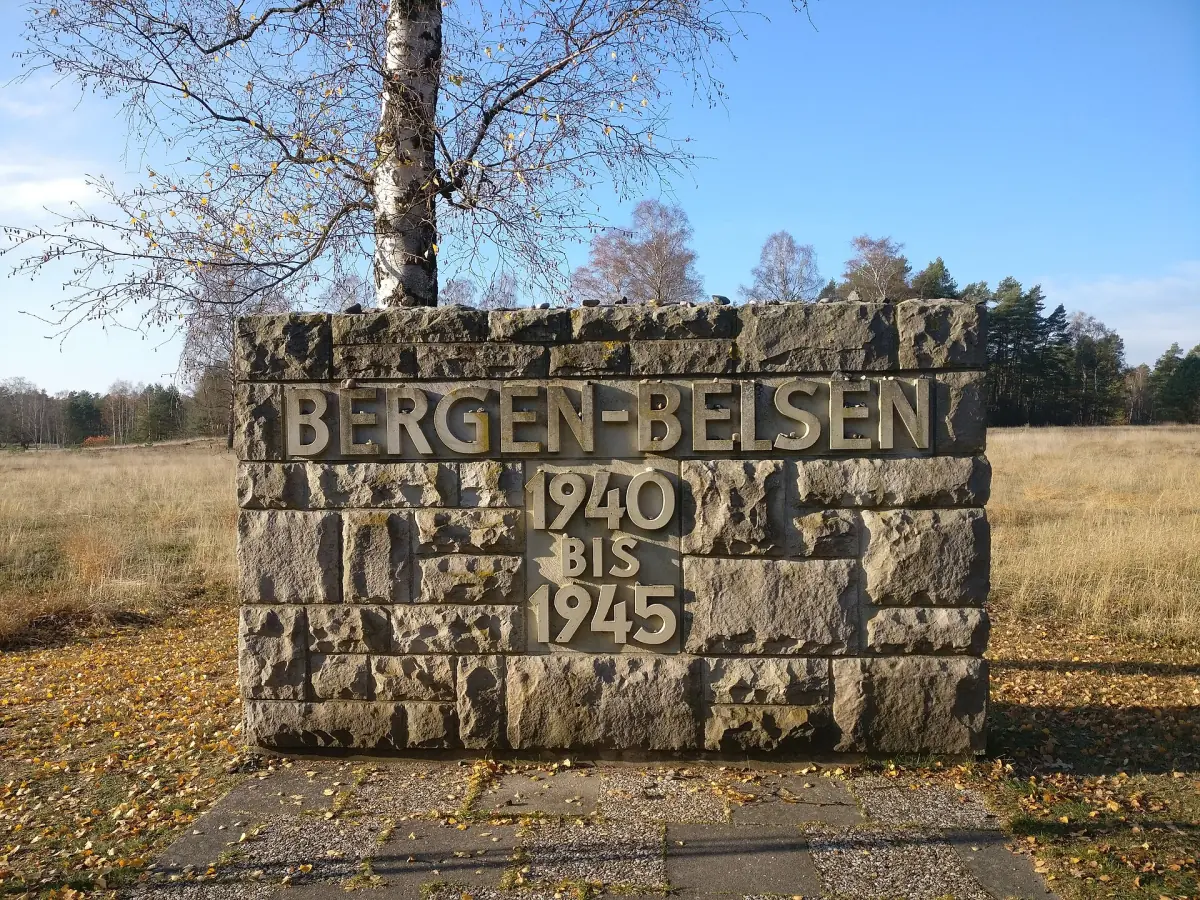
The Anne Frank story
From Frankfurt to Amsterdam, the hiding place, the arrest and Bergen-Belsen.
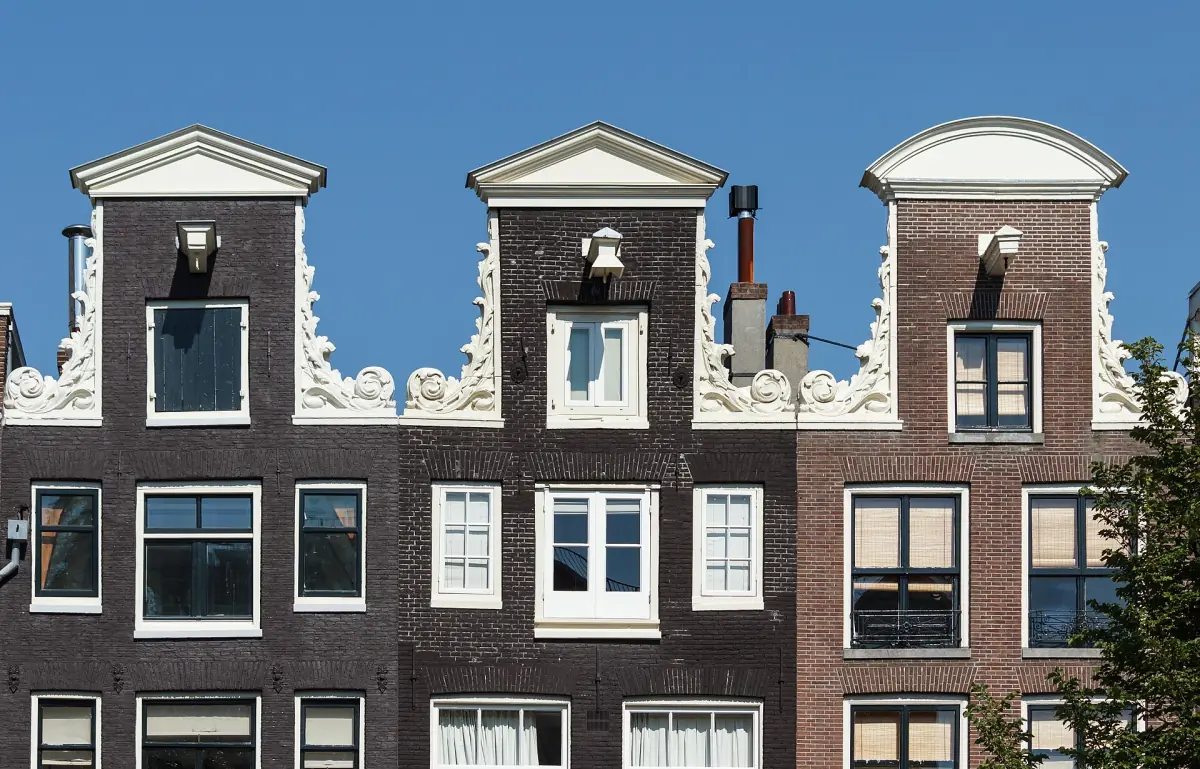
The Diary of Anne Frank
The versions of the text, the first edition and the rights.
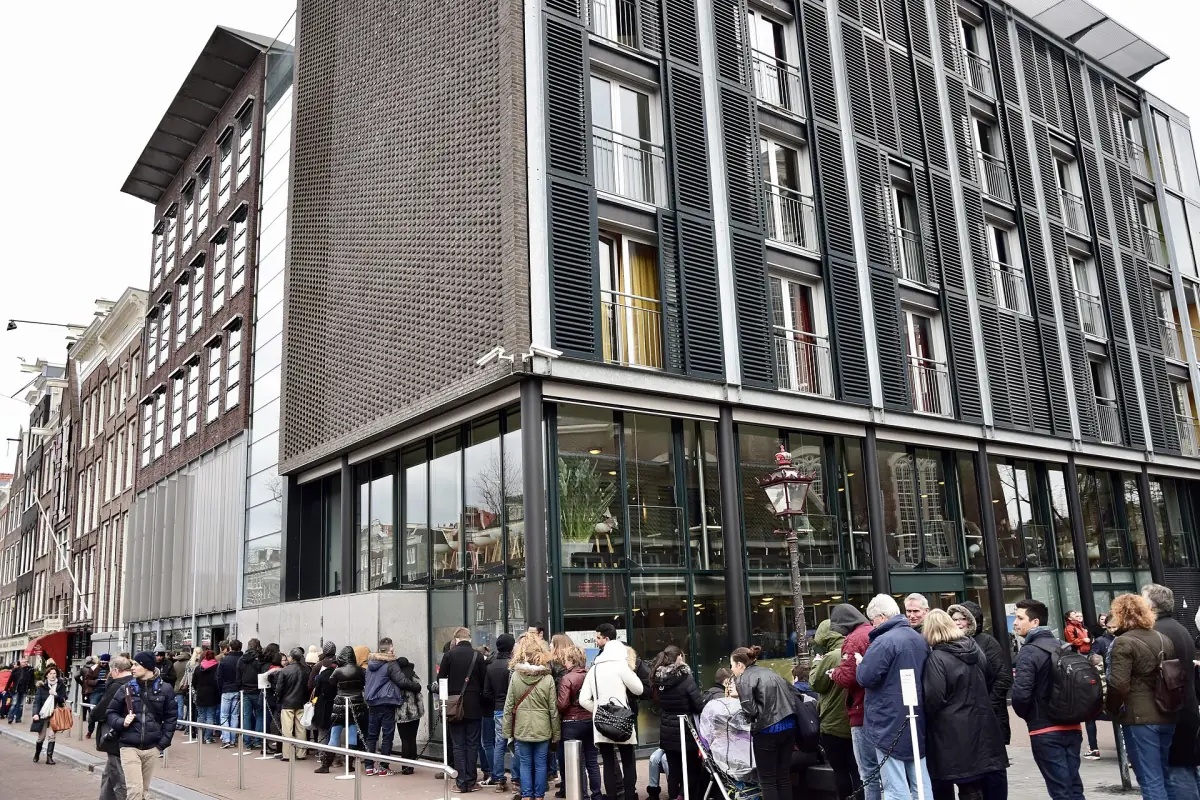
Anne Frank House tickets
Release dates, prices and what to do if a day is sold out.
Opening hours
Regular hours and the days with shorter times.
The Secret Annex: frequently asked questions
How many people lived in the Secret Annex?
Eight people: Anne, Margot, Otto and Edith Frank, Hermann, Auguste and Peter van Pels, and Fritz Pfeffer. They went into hiding on 6 July 1942 and were arrested on 4 August 1944.
Who helped the people in hiding?
Johannes Kleiman, Victor Kugler, Bep Voskuijl, Johan Voskuijl, Miep Gies and Jan Gies. Not only one person helped them.
Can I see the original bookcase?
Yes, the bookcase that Johan Voskuijl built in August 1942 has survived and is on display. It is the original, not a replica, and parts of it are protected by glass.
Is the Secret Annex furnished?
No. The rooms were left empty at the wish of Otto Frank. Anne's pictures on the walls and other traces have been preserved.
Can I enter the attic?
The attic is part of the history of the Annex. Entry to every room cannot be assumed on a visit, so do not plan around it.
Is this the official website of the Anne Frank House?
No. This is an independent travel guide. It is not connected to the Anne Frank Stichting or the Anne Frank Fonds. Tickets for the museum are sold only by the museum itself.