Three versions of one diary
Anne Frank wrote her diary in notebooks. These original entries are called version A. Later Anne reworked her texts on loose sheets, with a possible publication in mind. This version is called version B. It is Anne's own revision and not a rewriting by her father.
Version C is the edition that Otto Frank edited in 1947. He put it together from Anne's versions A and B. Anne is the author of the entries in all three. The history of editing and publishing does not change that.
How the text was handed down
What has survived, and what has not.
Version A: the notebooks
The original diary entries were written in notebooks.
Version B: Anne's revision
Anne reworked her own texts on loose sheets because she thought of a later publication.
Version C: the edition of 1947
Otto Frank edited the text and composed it from A and B. This is the basis of the first edition.
A gap in the original
The original entries from 5 December 1942 to 22 December 1943 have not survived. Version B covers parts of this period. For this reason it is not correct to say that all the original notebooks exist in full.
The first edition and the translations
The diary first appeared in Dutch under the title Het Achterhuis, published by Contact, on 25 June 1947. Achterhuis is the Dutch word for the rear part of a house. The first print run was about 3,000 copies.
Since then the diary has been translated into more than 70 languages.
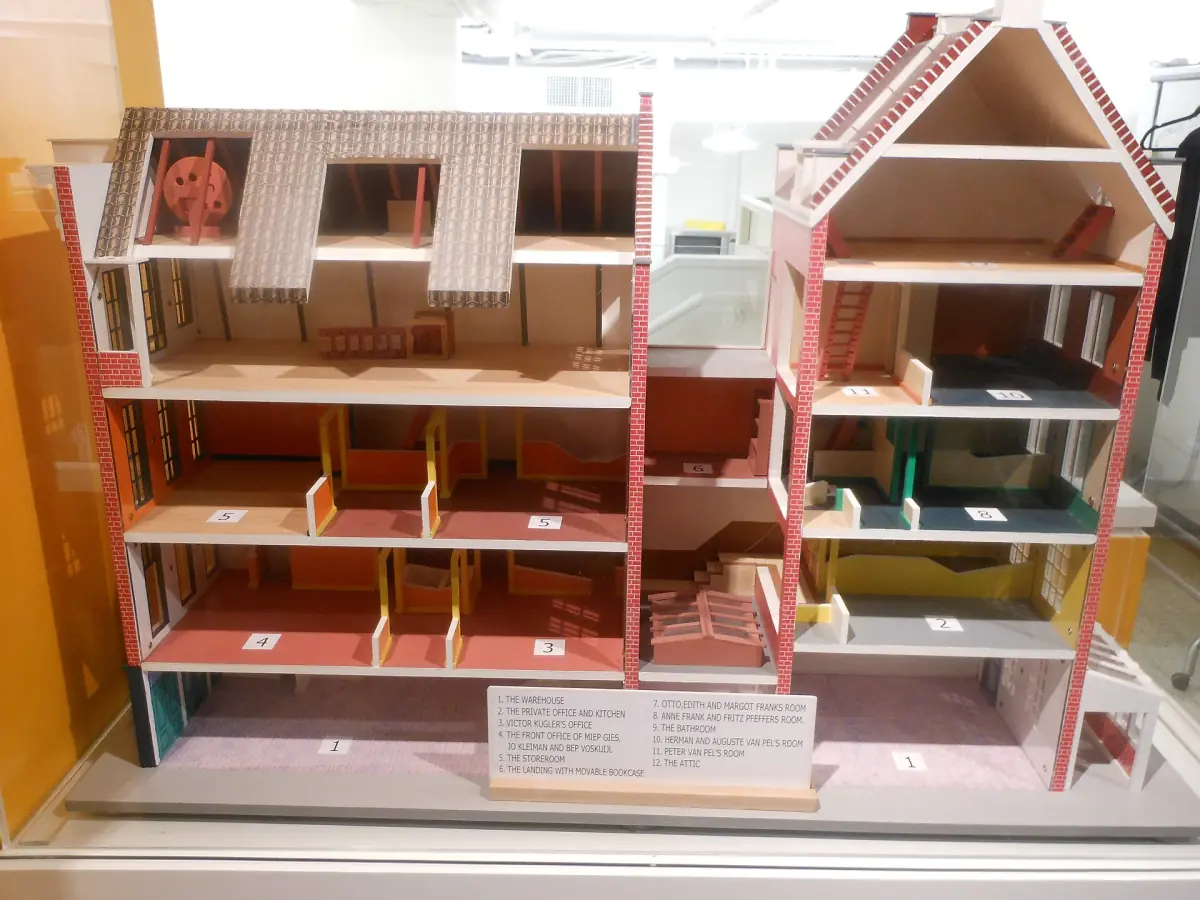
The story behind the text, from the hiding place to the arrest, is told on the page about the Anne Frank story. The hiding place is described on the page about the Secret Annex.
The diary in the museum
What the exhibition shows.
The original diary
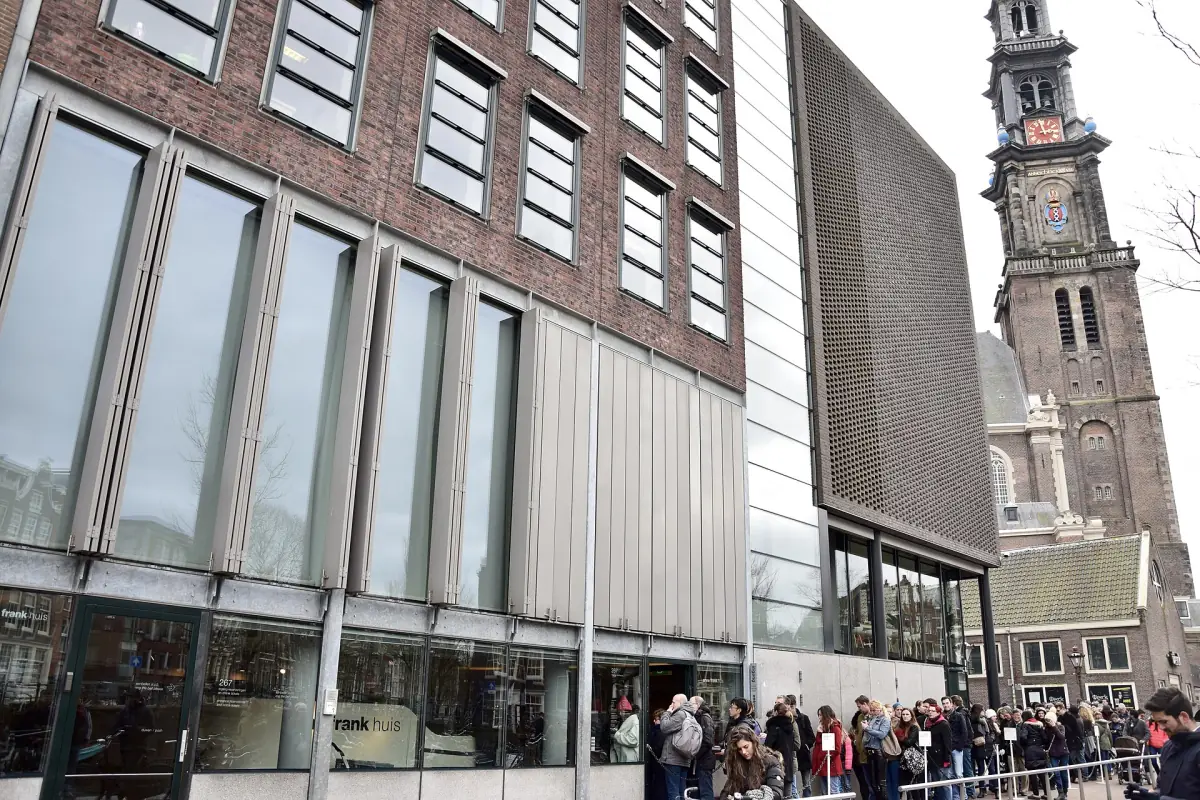
The museum shows the red-checked original diary. Other manuscripts and notebooks are displayed next to it.
The loose sheets
From the reworked version, loose sheets are shown, and they change from time to time. You cannot count on seeing one particular page of the diary on the day of your visit.
Rules in the museum
Photographing and filming are not allowed. The audio tour is included and is available in several languages, among them German and English. See Anne Frank House facts for the practical details.
Who looks after the diary and its rights
Two organisations with similar names have different tasks. The Anne Frank Stichting is the museum and education organisation in Amsterdam. It cares for the hiding place and the collection. The Anne Frank Fonds is a separate Swiss non-profit foundation based in Basel. Otto Frank founded it in January 1963 and named it his universal heir and legal successor. It is not the operator of the ticket sales for the museum in Amsterdam.
The Fonds inherited the rights of Otto Frank and Anne after Otto Frank died in 1980. It also manages the rights to adaptations and, together with publishers, the rights to translations. How long the text is protected can differ from country to country. Questions about reproducing the text go to the rights holder.
The Diary of Anne Frank: frequently asked questions
What are versions A, B and C?
A is the original diary in notebooks. B is Anne's own revision on loose sheets, written with a later publication in mind. C is the edition that Otto Frank edited in 1947 from A and B.
Did Anne Frank write the diary herself?
Yes. Anne is the author of the entries. Version B is her own revision, and the history of editing and publishing does not change the authorship.
Are all the original notebooks preserved?
No. The original entries from 5 December 1942 to 22 December 1943 have not survived. Version B covers parts of this period.
When was the diary first published?
On 25 June 1947 in Dutch, as Het Achterhuis, by the publisher Contact. The first print run was about 3,000 copies.
Can I see the diary in the museum?
The museum shows the red-checked original diary and other manuscripts. Loose sheets change from time to time, so a particular page cannot be guaranteed.
Is this the official website of the Anne Frank House?
No. This is an independent travel guide. It is not connected to the Anne Frank Stichting or the Anne Frank Fonds. Museum tickets are sold only by the museum itself.